White water rafting carries real risk, and that’s part of what makes it worth doing. But rafting with a professional commercial operator is a fundamentally different experience from paddling into the unknown on your own.
If you’ve been wondering, is white water rafting safe? The short answer is that going with a commercial operator changes the equation entirely.
What you need to know up front:
Is white water rafting safe? Rafting is an adventure activity, and adventure activities carry inherent risk. That’s the honest answer. What changes things dramatically is whether you’re rafting commercially with a qualified, regulated operator or doing it independently.
New Zealand’s commercial rafting industry is among the most tightly regulated in the world, overseen by WorkSafe NZ and the New Zealand Rivers Association (NZRA). Every commercial operator must hold a valid WorkSafe certificate, maintain a Safety Operations Plan, and employ guides with standardised NZRA qualifications.
At Kaituna Cascades, we’re audited by AdventureMark and comply with the New Zealand Safety Audit Standard for Adventure Activities 2017. We’re Qualmark Gold endorsed and have been running trips since 1991, with no major accidents on record.
The risk doesn’t disappear with a commercial operator, but it is well understood, actively managed, and transparent.
When it comes to white water rafting for beginners, the most common question is whether you need experience.
While experience helps, our Grade 4 and Grade 5 trips are built with beginners in mind. Before you hit the water, your guide covers everything: paddle commands, what to do if the raft capsizes, how to position yourself in the current, and how the river behaves. You don’t need to already know any of this; that’s what the briefing is for.
What you do need is a reasonable level of fitness, comfort in deep water, and a willingness to follow your guide’s instructions. The rest is taken care of.
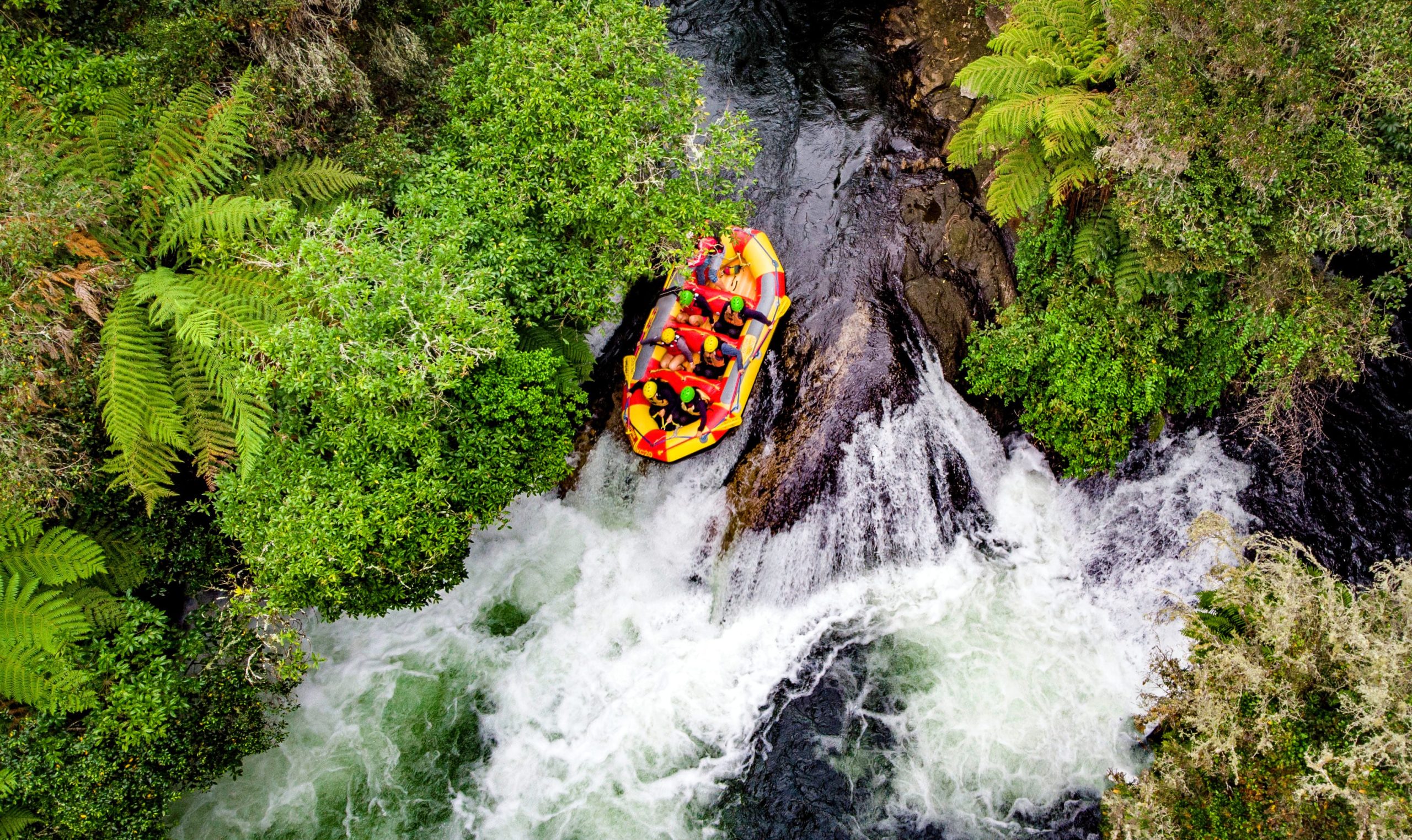
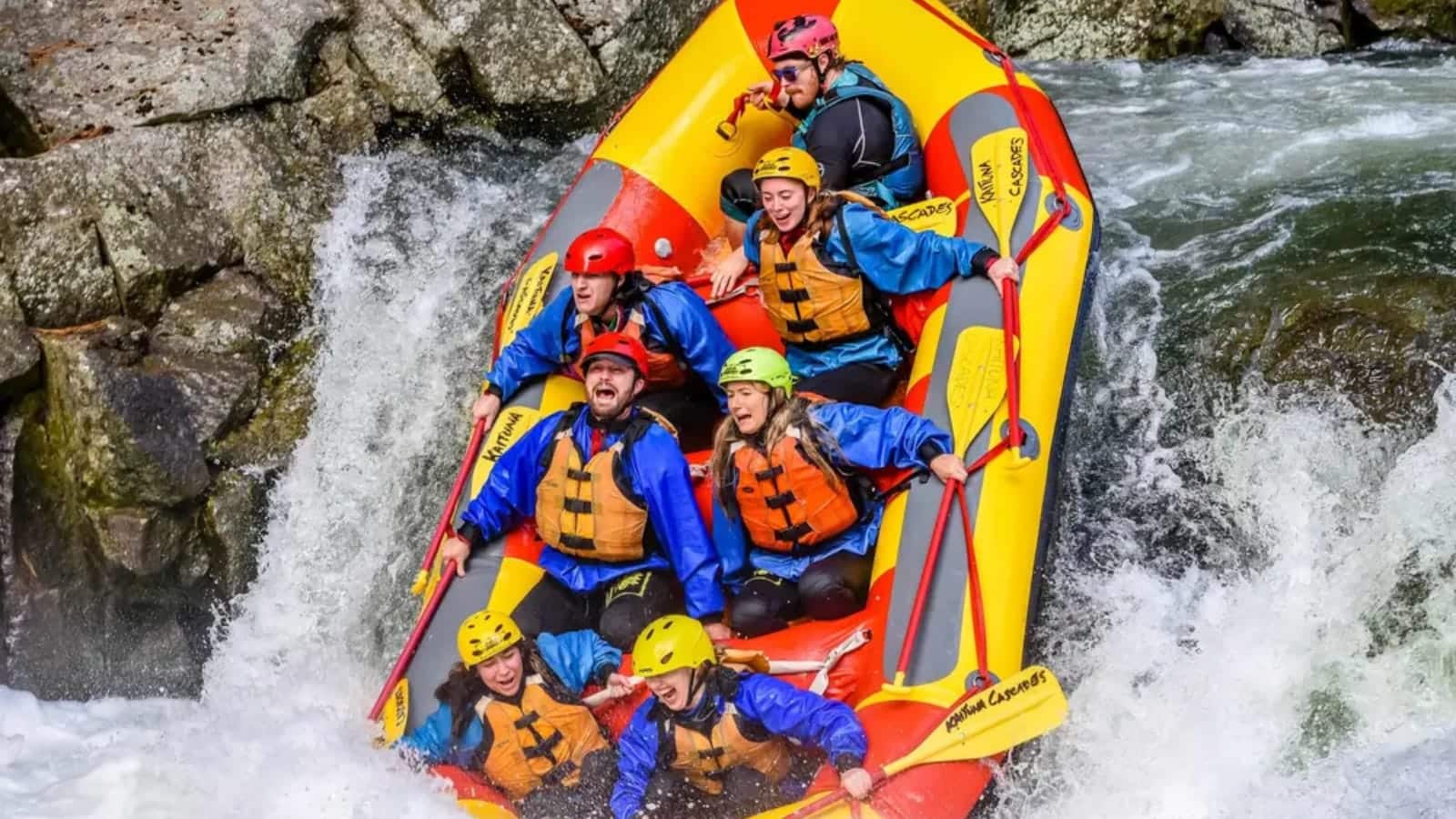
People searching for easy white water rafting sometimes assume Grade 5 is out of reach, but the Kaituna challenges that assumption. The rapids are powerful and technical, including Tutea Falls, the world’s highest commercially rafted waterfall at 7 metres, and your guide reads every line and leads every move. You’re not figuring things out as you go.
First-time rafters, solo travellers, couples, and groups tackle Grade 5 regularly. Capsizing happens on roughly 1 in 20 trips, and the deep-water pools below the main rapids mean there are no submerged rocks to worry about. Most people who flip end up considering it the highlight of their day.
River grades run from 1 to 6. Commercial rafting in New Zealand operates on Grade 3 through 5.
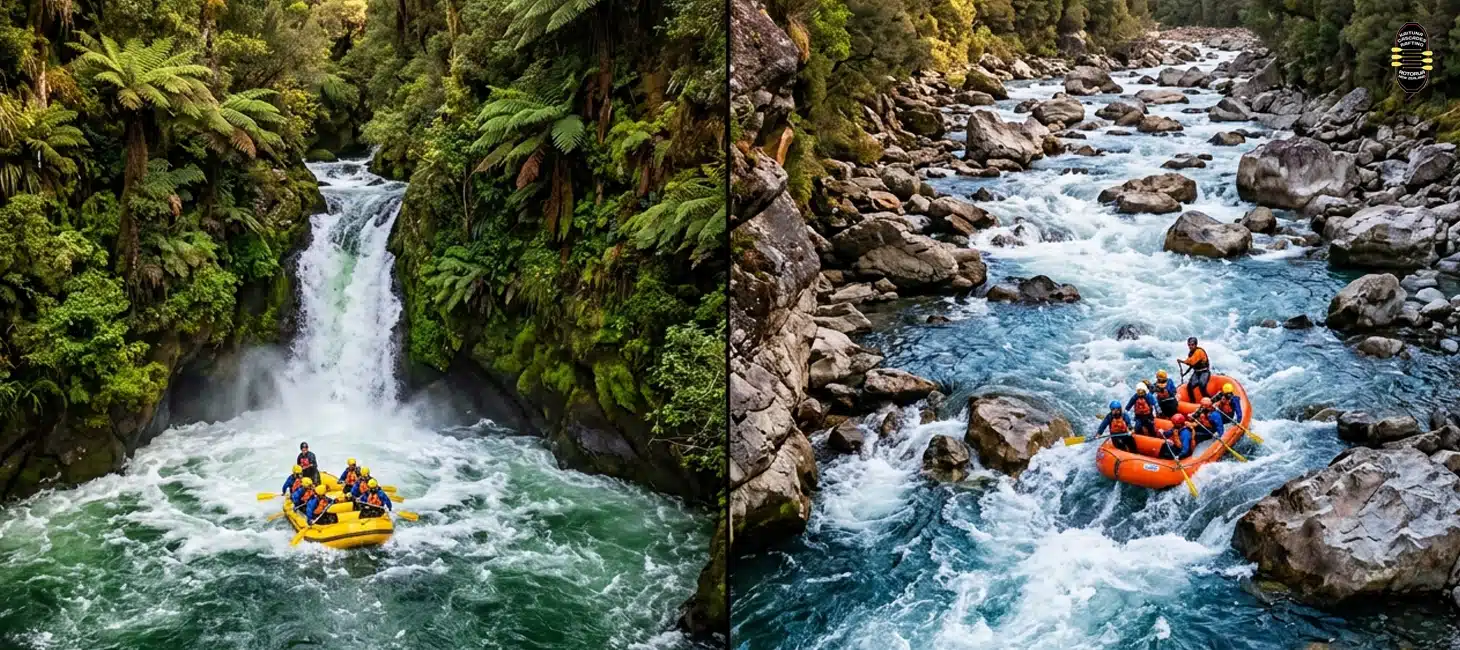
Grade 3 introduces real whitewater with manageable waves, exciting without being intense. Grade 4 delivers proper whitewater thrills with defined rapids and some technical challenges. Grade 5 is the top of commercial operations: powerful, irregular waves, significant drops, and real consequences for errors, which is why guides matter.
Kaituna River Rafting runs 14 rapids, of which 2 are Grade 4, and only the big one is Grade 5, culminating in Tutea Falls at 7 metres. Wairoa River Rafting is also Grade 5, dam-released, runs just 26 days per year, and is considered one of the most exciting commercial runs in New Zealand. Both require participants to be 13+, fit and healthy, comfortable in water, and under 120kg.
When river conditions aren’t safe, and the Kaituna is flooded by heavy rain, we offer Rangitaiki River Rafting as a Grade 4+, half-day backup option.
Each Kaituna Cascades participant gets a full kit: custom-built raft, wetsuit, helmet, life jacket, paddles, warm fleece top, wetsuit booties, and splash jacket. Nothing is optional, and nothing goes unchecked in the water.
Before hitting the river, every group gets a full safety briefing covering paddle commands, what to do in a capsize, and how to position yourself to reduce the risk of collisions. Our guides hold Grade 5 qualifications and 5 to 20+ years of experience across NZ and international rivers, and they’re trained in swiftwater rescue and first aid.
A few things first-timers often ask about:
Our guests are independent travellers, couples, and groups of friends aged 18 to 55. Many arrive specifically looking for white water rafting for beginners, having never been on a raft before. Others are seasoned travellers after something they’ll still be talking about in five years. Both leave satisfied.
Rotorua is one of the world’s best locations for commercial rafting, and the Kaituna is the centrepiece. Always check the conditions before heading out, as high rainfall can affect which river we run on any given day.
If you’re after easy white water rafting without needing prior experience, Grade 4 and Grade 5 at Kaituna Cascades are designed for you. Your guide will cover everything you need in the pre-trip briefing.
All adventure activities carry some risk. Commercial rafting with a regulated operator is significantly safer than going at it alone. With an experienced guide by your side, the risk of injury is much lower.
You need to be comfortable floating in deep water. Guides, life jackets, and wetsuits do most of the work, but water confidence makes the experience more enjoyable and manageable.
Hold onto the raft, keep your feet up, and let the current carry you to calmer water. Your guide covers this in the pre-trip briefing. Most people who flip end up thinking it was the highlight.
No. Rafting is not suitable for pregnant women.
13 years or older for all Grade 4 and Grade 5 rivers.
Still asking: is white-water rafting safe? The Kaituna’s track record speaks for itself: one of the world’s great commercial rivers, no experience required, all gear provided, and guides with decades on the water.
Book with Kaituna Cascades online today, or get in touch if you have any questions about which trip is right for you.

This was a great couple bonding experience that took us both to the edge of our comfort zones. Could not speak highly enough of the professionalism of the guiding team - yet making the whole experience one of such fun.

MY FAVOURITE EXPERIENCE IN NZ SO FAR. TOOK THE 9AM TOUR TODAY AND ALREADY CAN'T WAIT TO COME BACK. THE RAFTING WAS SO MUCH FUN AND THE TOUR GUIDES ARE HILARIOUS. NEVER FELT IN ANY DANGER JUST ENJOYED THE RIDE! WOULD RECOMMEND TO ANYBODY. I WENT AS A SOLO TRAVELLER AND IT WAS STILL REALLY ENJOYABLE.
Brilliant! We had heaps of fun. Guides were friendly and made us feel safe and comfortable. Highly recommended to all!
Fantastic outfit. The crew were cheeky as but super professional. We felt safe throughout the entire experience. 11/10 and a big shoutout to Rob for being a GC.
White water rafting at its best. Wonderful guides. A must do when in or around Rotorua. Felt safe, but had the best time.
Great experience! Made me feel safe when I was scared!! You the m san Owen! So glad I did it. It is beautiful!
The guide, Sam, went out of his way to make the trip as fun and exciting as possible. The whole team were friendly and inclusive.
Cole was a really good guide, talked us through everything and had a good laugh. The water was nice, not cold at all. They provide wetsuits, footwear, helmets, life jackets and polo fleeces. Worth the money and would do it again. Recommend going in a group so that you can split the cost of photos.
Unbelievable experience rafting the 7m waterfall this morning! Even more fun when the boat flipped!! Highly recommend! Great fun and great instructors!! Shout out to Pete From the Irish girls.
© 2026 | Kaituna Cascades | All Rights reserved | Designed by